
You Rented the U-Haul. Now Hire People Who Know How to Load One.
Anyone can put furniture in a truck. Loading a U-Haul so nothing shifts, everything fits, and you don't need a second trip is different work. Tell us about your move, see your price, and book experienced loading help.
Here's what usually goes wrong — and how this works instead
- Movers experienced with 10-, 15-, 20-, and 26-foot U-Hauls
- Load-order planning to fit everything in one trip
- Straps and pads brought by the crew
- Two-hour minimum — you don't pay for a full day
- U-Haul job history shown on each profile
- Damage claims from truck loads tracked publicly
- Verified equipment on every mover you compare
What is u-haul loading labor?
U-Haul loading help is labor specifically for loading U-Haul rental trucks — from the 10-foot cargo van to the 26-foot box truck. Same idea as generic truck loading, but the U-Haul cabin shape and tie rails have their own quirks.
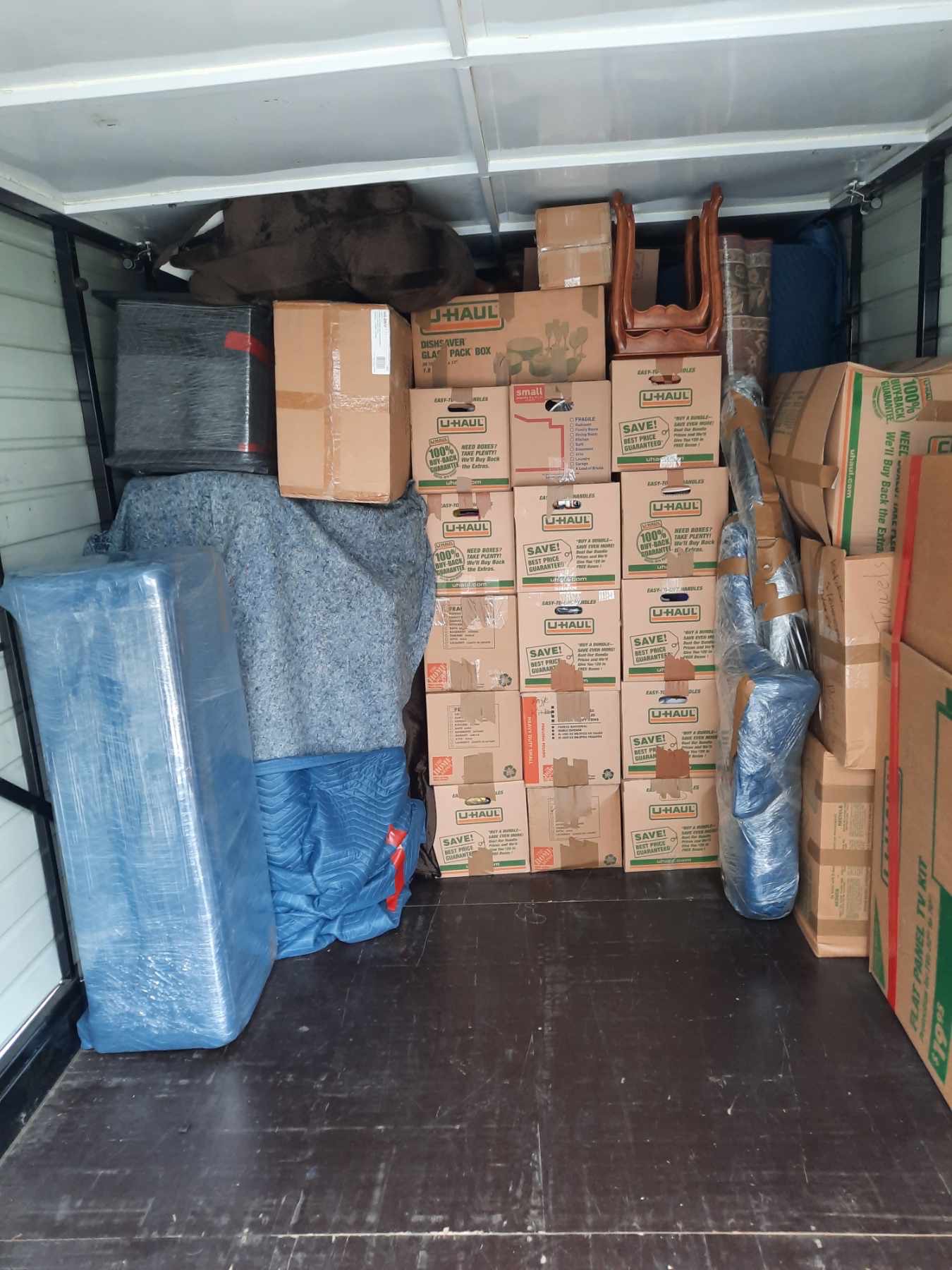
Who needs this service
When to book this service
- The truck is picked up and needs to be loaded the same day
- You want to fit a whole apartment or house in a single truck
- You have furniture that needs to survive the drive without shifting
- You're loading a one-way rental and can't afford a re-do
What you get
Common mistakes to avoid
What to look for in a mover
- Movers who mention U-Haul loading in their profile
- Reviews from long-distance customers whose loads didn't shift
- Willingness to bring straps and blankets
- Experience with the truck size you rented
Recommended crew size
10–15 foot U-Haul: 2 movers, 2–3 hours. 17–20 foot: 2–3 movers, 3–5 hours. 26-foot: 3–4 movers, 4–6 hours.
Equipment used on this job
Why experience matters
The 26-foot U-Haul has a mother's attic — the space over the cab — that's perfect for light boxes and mattresses. Most first-time renters leave it empty. Experienced loaders fill it first, which frees up floor space for furniture and often turns a two-trip move into one.
Matching the truck to the load
Renting one size too small is the most expensive mistake in a self-move. A second trip across town costs you fuel, mileage, and two or three more hours of labor. Renting one size too large costs a few dollars a day and nothing else. When in doubt, size up.
Rough guidance from completed moves: a 10-foot truck holds a studio or a very light one-bedroom; a 15-foot truck handles most one- and two-bedroom apartments; a 20-foot truck fits a two- to three-bedroom home; a 26-foot truck is for four bedrooms and up. Garages, workshops, and home gyms shift you a size up on their own.
Crew size and hours
| Truck | Crew size | Typical hours | Labor at $45/hr per mover |
|---|---|---|---|
| 10 ft | 2 movers | 1.5–2 hours | $135 – $180 |
| 15 ft | 2–3 movers | 2–3 hours | $180 – $405 |
| 20 ft | 3 movers | 3–4 hours | $405 – $540 |
| 26 ft | 3–4 movers | 4–6 hours | $540 – $1,080 |
Using the truck's features properly
- Mom's Attic is for light, fragile, oddly shaped items — lamps, mirrors, framed art — not for storage overflow
- Use the strap rails every four to six feet; a load that is not tied off will shift on the first hard stop
- Load appliances first, against the front wall, upright and strapped
- Keep the ramp clear until the end; it is where the awkward pieces get staged
- Return the truck swept out to avoid a cleaning charge, and do it while the crew is still there
Fuel, mileage, and the real cost of a self-move
A rental truck is priced in three parts: the daily rate, the per-mile charge, and the fuel you replace. A 20-foot truck averages roughly 10 miles per gallon loaded. For a 30-mile local move that is about three gallons plus the mileage charge, so budget $80 to $140 for the truck side of the day.
Add labor on top — three movers at $45/hr for four hours is $540 — plus fuel reimbursement of $10 to $15 per mover and the flat $49 booking fee. A realistic all-in for a three-bedroom self-move with hired labor lands between $700 and $900, against $1,800 to $2,600 for a full-service company on the same job.
What movers can and cannot do with your rental
Hired labor loads and unloads. Movers do not drive your rental truck, and no rental agreement allows an unlisted driver anyway. You or someone in your household handles the drive, which is exactly what keeps this option well under a full-service quote.
Movers also do not sign for the truck, refuel it, or take responsibility for mileage overages. What they do own is the load: how it is padded, stacked, and secured, and the condition your items arrive in.
One practical note — pick the truck up the evening before if the rental location allows it. Starting the crew at 8am with a truck already in the driveway is worth more than the extra rental day costs.
Rental checklist before the crew arrives
- Truck picked up, ramp down, and parked as close to the door as legally possible
- Furniture pads rented or purchased — plan on two dozen for a two-bedroom, more for three
- A dozen extra straps or rope beyond what the truck provides
- Fuel level photographed at pickup so the return level is not a dispute
- Existing damage photographed on all four sides before you drive off the lot
- Return time confirmed, with the crew told about it so the unload is paced correctly
Moving help matched to your needs
Post the move and mention the U-Haul size. We use that detail to match qualified loading help.