
Local Moving Labor You Can Actually Trust
Most local moves come down to two things: the people carrying your furniture and how prepared they show up. Tell us about your move, choose the rate and crew size, and see your price before you book.
Here's what usually goes wrong — and how this works instead
- See individual mover profiles, rates, and reviews before you commit
- Post your local move, see your price, and book your help for $49
- Live ETA and Move PIN check-in on move day
- Pay hourly with a two-hour minimum — no inflated flat rates
- Every mover is reviewed by a real admin before appearing on the platform
- Quality Scores based on completed moves, not marketing
- Verified background checks and insurance shown on every profile
What is local moving labor?
Local moving labor covers moves that stay inside the same metro area — typically under 50 miles. You hire the people, not the truck. That means you can keep costs down by renting your own truck or POD, and put your budget toward experienced hands who actually know how to load it.
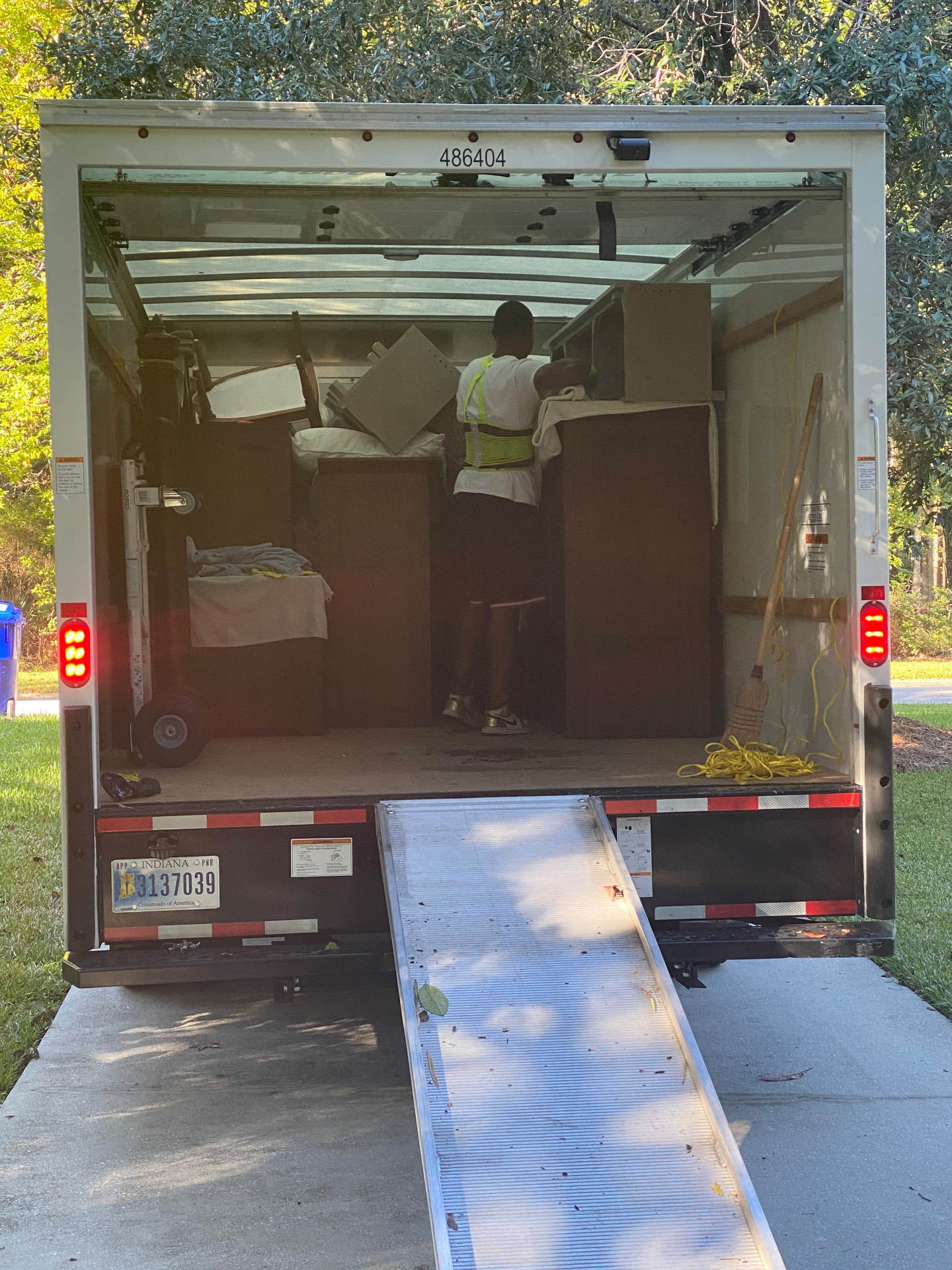
Who needs this service
When to book this service
- You already have a truck, POD, or trailer arranged
- You want more control over pricing than a full-service moving company offers
- You have specific items that need experienced hands (appliances, heavy furniture, glass)
- You want vetted independent professionals whose skills and equipment fit your move
What you get
Common mistakes to avoid
What to look for in a mover
- Verified reviews from customers who actually completed a booking
- A Quality Score that reflects punctuality, preparedness, and damage-free moves
- Photos of the mover and their equipment, not stock images
- One clear hourly rate set by the job — no vague quotes, no bait-and-switch
Recommended crew size
A studio or small one-bedroom is usually fine with two movers. Two-bedroom homes typically need three. Three-bedroom or larger homes almost always benefit from a four-person crew — the truck gets loaded faster, and less time on the clock offsets the extra mover.
Equipment used on this job
Why experience matters
Loading a truck is a skill. An experienced mover fits a three-bedroom home into a 20-foot truck without a second trip and stacks it so nothing shifts in transit. That difference alone can save you two hours of billed labor and a broken headboard.
How a local move actually runs, hour by hour
Most people budget for a local move by guessing a number of hours and hoping it holds. It rarely does, because the clock is driven by things nobody writes down: how far the truck parks from the door, whether the boxes are packed and closed before the crew arrives, how many pieces need disassembly, and how many flights of stairs sit between the bedroom and the curb.
A typical two-bedroom local move with a three-person crew looks like this. The first fifteen minutes are walkthrough and staging — the lead mover walks the home, agrees on what goes and what stays, and sets floor runners and door protection. The next forty-five minutes are the boxes and small items, which move fastest and build a stable base in the truck. Hour two is furniture: beds broken down, dressers emptied where needed, sofas wrapped and turned through doorways. Hour three is the awkward middle — the garage, the closet nobody packed, the plant collection. Hour four is the drive and unload, which is almost always faster than the load because placement takes less thought than stacking does.
Understanding that rhythm is what makes an hourly crew cheaper than a flat quote. Every hour you remove from the front end — packed boxes, cleared paths, reserved parking — comes straight off your total instead of disappearing into someone else's margin.
Crew size and hours by home size
Crew size is the single biggest lever on your final cost, and bigger is usually cheaper than it looks. Adding a fourth mover to a three-bedroom move raises the hourly rate but often cuts two hours off the day, because carries overlap instead of queueing. The table below reflects what our completed moves actually run at the $45/hr Move Board rate.
| Home size | Crew size | Typical hours | Labor at $45/hr per mover |
|---|---|---|---|
| Studio / small 1-bed | 2 movers | 2–3 hours | $180 – $270 |
| Large 1-bed / small 2-bed | 2–3 movers | 3–4 hours | $270 – $540 |
| 2-bed house | 3 movers | 4–5 hours | $540 – $675 |
| 3-bed house | 3–4 movers | 5–7 hours | $675 – $1,260 |
| 4-bed or larger | 4–5 movers | 7–9 hours | $1,260 – $2,025 |
- Add roughly 30 minutes per flight of stairs at either address
- Add 30–45 minutes when the truck cannot park within 75 feet of the door
- Add an hour if boxes are still open or unpacked when the crew arrives
- Subtract 30–60 minutes when everything is boxed, taped, and stacked by the door
What your total actually includes
The $49 booking fee is charged once, at booking, no matter how large the crew is. There is no percentage of your labor total, no fuel surcharge, no stair fee, no heavy-item fee, and no weekend premium. The labor balance is authorized the day before your move and is held until you verify the move is complete and sign off.
For a three-person crew at $45/hr for five hours, the math is $675 in labor, roughly $36 in fuel, plus the $49 booking fee — $760 total, itemized on your invoice before you approve it.
How to prepare so you pay for less time
- Finish packing the night before. A crew waiting on boxes is a crew on the clock.
- Empty dresser drawers of anything heavy or breakable; light clothing can usually stay.
- Disconnect the washer, dryer, and refrigerator at least 24 hours out and drain the lines.
- Reserve parking or a loading zone at both addresses, and book the freight elevator if a building requires it.
- Label boxes by destination room, not by contents — it saves the unload, not the load.
- Set aside a do-not-move zone: keys, medication, chargers, documents, and anything you need that night.
- Have your Move PIN ready. The crew cannot start the clock without it.
Why hiring the crew directly costs less
A full-service moving company sells you a bundle: truck, fuel, insurance, dispatch, overhead, and labor. If you already have the truck — a rental, a POD, a trailer, a friend with a box truck — you are paying for a lot of things you do not need. Hiring labor by the hour separates the two, and for most local moves under 50 miles it is the difference between a $1,900 flat quote and a $760 itemized total.
The tradeoff is that you are the coordinator. You book the truck, you confirm the address details, you decide the crew size. What you get back is control over who shows up. On Move Gigs Board you see each mover's completed move count, verified reviews, Quality Score, background check status, and equipment before you invite them.
Moving help matched to your needs
Some movers are exceptional loaders. Others are faster at carrying heavy items up stairs. We match your move with qualified help based on the skills and equipment it requires.